
Hardwood Floor Cleaning in Kingwood, TX: Maid or Floor Pro?
Search “hardwood floor cleaning Kingwood TX” and the results are a mix: floor refinishers, carpet and tile companies with scrubbing machines, and residential cleaning services like ours. They do different jobs. If you hire the wrong one, you either pay a specialist for routine maintenance or ask a maid service to fix something only sanding will fix.
We’re U Have It Maid, a family-owned cleaning company that has served North Houston since 2000. Hard floors are part of every visit we do in Kingwood. This guide covers what routine hardwood care should look like, which products quietly damage a finish, and the signs that your floors need a flooring professional instead of a cleaning crew.
Why Hardwood Floors Work Harder in Kingwood
Kingwood isn’t called the Livable Forest for nothing. The tree canopy that makes the neighborhoods so pleasant also keeps a steady supply of grit coming through the front door. Pine needles, oak tassels in spring, sandy soil from the greenbelt trails and the yellow pollen film every March all end up on the entry floor. On hardwood, that grit acts like fine sandpaper. Each step grinds it into the finish, which is why the first few feet inside the door and the path to the kitchen are usually the first areas to look dull.
Humidity is the second factor. Wood takes on and gives off moisture with the air around it, so it swells in damp months and shrinks in dry ones. Houston summers push indoor humidity up quickly when the AC can’t keep up or a bathroom fan isn’t used. The EPA recommends keeping indoor relative humidity below 60 percent, ideally between 30 and 50 percent. That range also helps wood floors stay flat and tight.
Many Kingwood homes also have floors that aren’t original. After Hurricane Harvey flooded homes near Lake Houston and the San Jacinto River in 2017, a lot of homeowners replaced their flooring, often with engineered hardwood or luxury vinyl plank (LVP) that looks like wood. Those materials need different care, so the first step is knowing what you actually have.
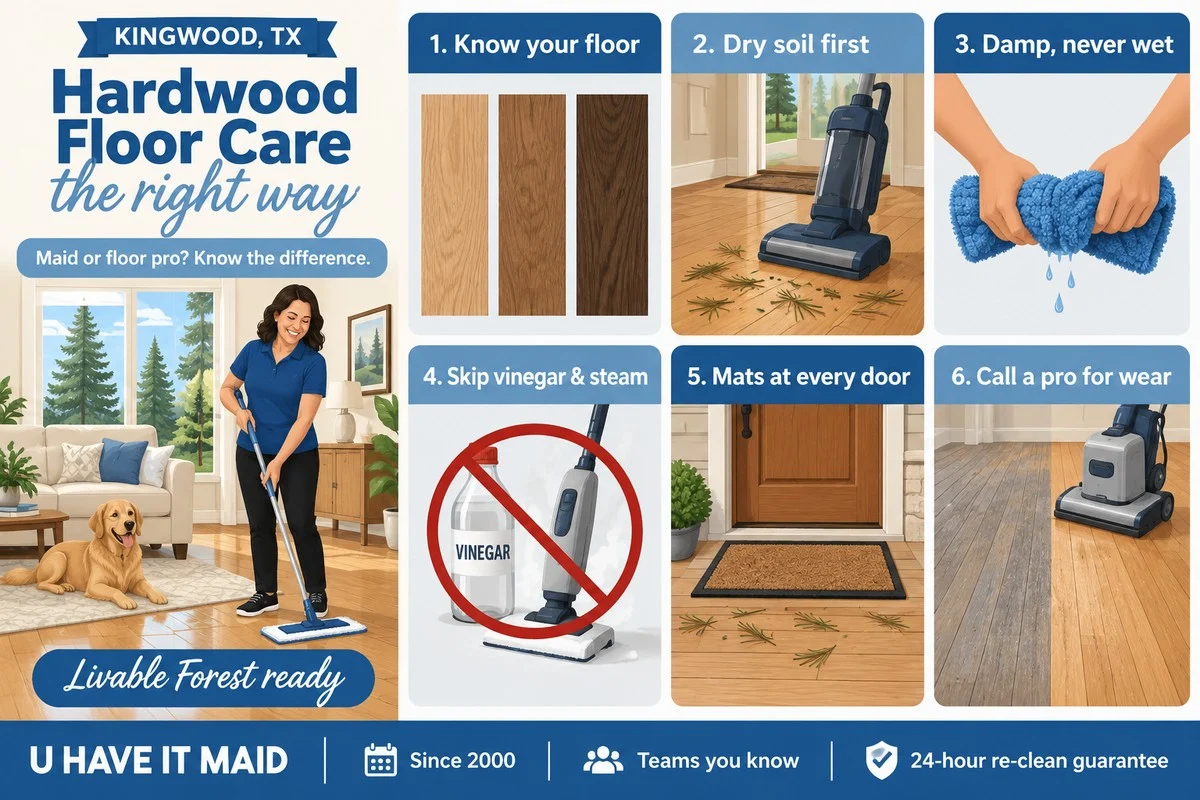
Know Your Floor Before Anyone Cleans It
- Site-finished solid hardwood: typical of older Kingwood homes from the 1970s through the 1990s. It’s usually oak, sanded and coated with polyurethane after installation, and it can be refinished several times.
- Prefinished engineered hardwood: a real wood top layer over a plywood core, finished at the factory. It handles humidity better than solid wood, but the wear layer is thin, so it can only be refinished a few times or not at all.
- Waxed or oil-finished wood: less common, but you’ll find it in some custom and older homes. Water-based cleaners can leave these floors spotty, so they need products made for their finish.
- Luxury vinyl plank: looks like wood but is plastic. It’s very water-resistant, but harsh solvents and steam can still damage the surface or the locking joints.
If you’re not sure which you have, check your purchase paperwork or the builder’s or installer’s care sheet. Many manufacturers name a specific cleaner in the warranty, and using something else can void it.
What Routine Hardwood Floor Cleaning Should Look Like
The National Wood Flooring Association describes routine care simply: sweep, dust mop or vacuum on the bare-floor setting to remove dirt, wipe up spills right away with a dry or slightly damp cloth, and use a cleaner made for your floor’s finish. It specifically warns against wet mops and steam mops. Good professional maintenance follows the same order:
- Dry soil comes off first. Vacuum with the beater bar off, or use a microfiber dust mop. Mopping before the grit is gone just drags it across the finish.
- Edges and corners get attention. Under the kitchen toe kicks, along the baseboards and behind doors is where pine debris and pet hair collect.
- Then a damp mop, not a wet one. Use a well-wrung microfiber pad and a pH-neutral cleaner suited to the finish. The floor should dry within a minute or two. Standing water seeps into the seams between boards, and that’s how edges start to lift.
- Spots are handled on their own. Treat sticky spots under the breakfast table or near the dog’s water bowl separately, so you don’t go over the whole floor with extra moisture.
Vacuuming and mopping hard floors is part of every standard house cleaning visit we do, as our cleaning checklist shows. We bring all our own equipment and products. If your flooring manufacturer specifies a cleaner, leave it on the counter with a note. We’ll use it, and we’ll save it to your client notes for future visits.
What to Keep Off Your Hardwood
Most hardwood damage we see doesn’t come from neglect. It comes from homeowners using the wrong products with good intentions:
- Vinegar and other acidic mixes. Vinegar is a popular home remedy, but it’s an acid, and repeated use slowly dulls a polyurethane finish. You may not notice the haze for months.
- Steam mops. Heat and moisture together push water into seams and soften finishes. The NWFA and most manufacturers advise against them.
- Oil soaps and “shine restorer” products. They leave a film that looks good for a week, then attracts dirt and builds up. The bigger cost comes later: residue can stop a new coat of finish from bonding when the floor is recoated, so the refinisher may have to sand instead of doing a simpler recoat.
- Ammonia, bleach and abrasive pads. These are too harsh for any wood finish.
- Soaking-wet string mops. On hardwood, more water never means cleaner.
When You Need a Hardwood Floor Specialist, Not a Maid Service
This is the honest part, and it’s why this question matters. A cleaning crew maintains a finish. It can’t restore one. Call a flooring professional if you see any of these:
- Gray, worn traffic lanes where the finish is gone and bare wood shows. Cleaning won’t bring back a finish that has worn away.
- Floors that look dull everywhere even right after a careful cleaning. That usually means the floor needs a recoat, which the NWFA describes as applying a fresh coat of finish. It’s a job for a flooring contractor.
- Cupping or crowning, where board edges rise above the centers or the centers bulge up. That’s a moisture problem, often from a slab leak, an AC drain, a plumbing issue or poor drainage outside. Find the source before anyone touches the floor.
- Black or gray water stains that have soaked into the wood itself. These usually need sanding or a board replaced.
- Deep scratches and gouges from furniture, dogs or moving day.
Our own policy says the same thing: we clean set-in stains and porous surfaces, including wood, as thoroughly as possible, but some won’t look like new afterward. We’d rather tell you that before the visit than after it.
Everyday Habits That Protect Kingwood Floors
- Use mats on both sides of every exterior door, including the door from the garage. A good outdoor mat catches the coarse pine debris, and an indoor mat catches the fine grit.
- Take shoes off when you can, especially during spring pollen season and fall needle drop.
- Put felt pads under chairs and barstools, and replace them when they pick up grit.
- Do a quick dry sweep of the entry on days with heavy debris, between professional cleanings.
- Keep humidity steady: run bathroom fans during and after showers, and check that the AC is actually removing moisture in summer.
- Trim pets’ nails and put a tray under water bowls. A dog that splashes its water every day can stain the boards around the bowl within one summer.
- Use rugs that are safe for hardwood. Some rubber-backed rugs can discolor the finish underneath.
How Hardwood Fits Into Your Cleaning Visits
Every recurring service with us starts with a deep cleaning, and floors are a big part of it. Along with baseboards, door frames and cabinet doors, the floors get cleaned thoroughly so the regular visits afterward can keep them at a steady level. After that, weekly or monthly visits handle the routine soil removal and damp-mopping described above.
Two things help us do the floors well. First, clear the floors of toys, shoes and clothes before we arrive, so the team can reach the whole surface. Second, tell us about any boards that are already lifting, stains you’ve tried to remove before, or areas you’d like us to avoid. We work in teams of about three and try to keep the same team on your home, so those notes stay with the people who clean it. If anything isn’t right, let us know within 24 hours and we’ll come back and re-clean it free.
Keep Your Kingwood Floors Looking Their Best
If your hardwood needs restoring, call a flooring professional first. If your floors are in good shape and you want them, along with the rest of the house, cleaned correctly on a schedule, we can help. Learn more about our work on our Kingwood house cleaning page, or request a free quote and tell us what kind of floors you have.
About the Author: German Otto

Share this article
Related Posts


Follow us
A quick overview of the topics covered in this article.